
Community-driven housing and public space repair for a historic neighborhood
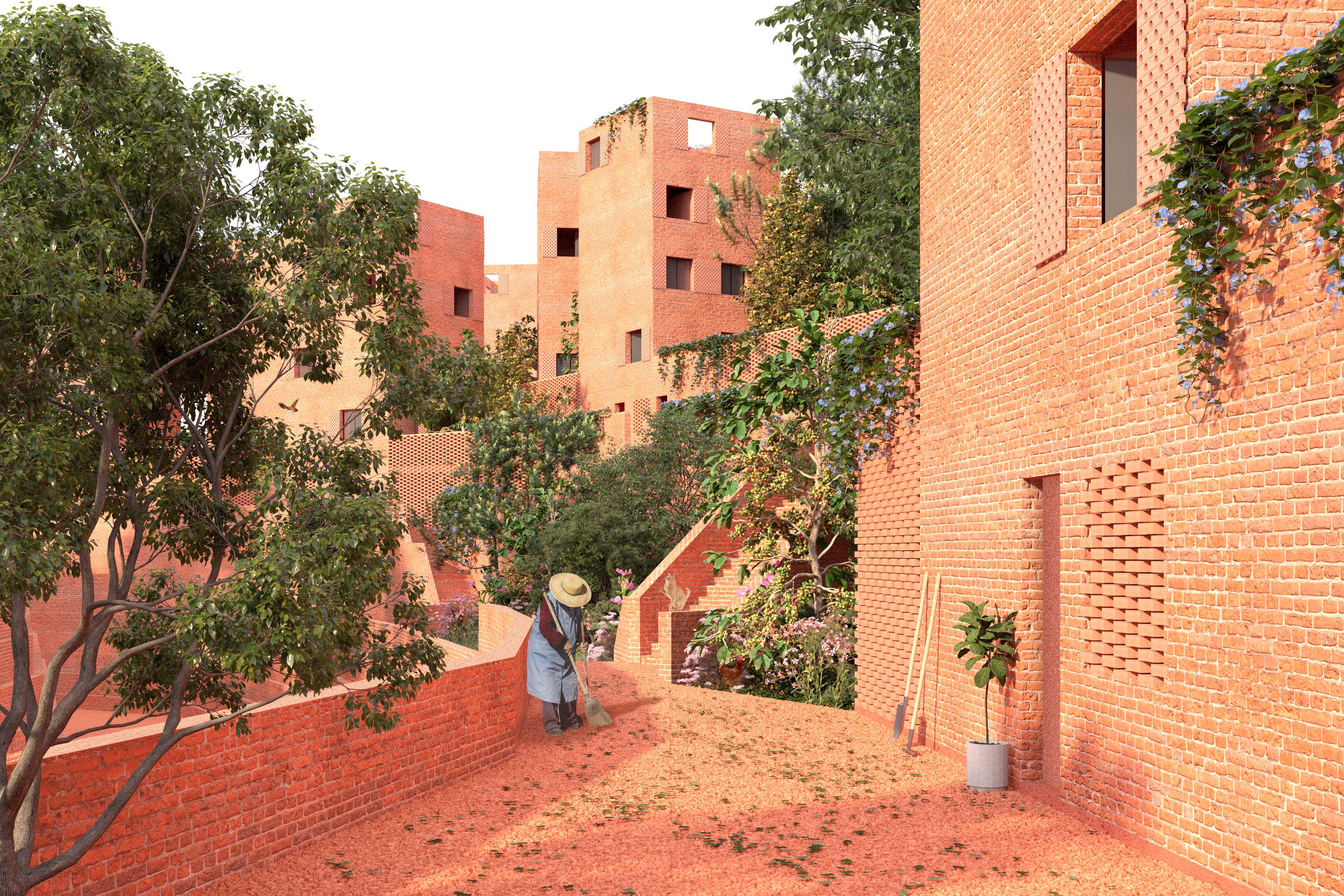
Barrio Chacarita Alta Housing exemplifies a holistic approach to upgrading vulnerable neighborhoods, integrating dignified housing with revitalized public spaces. Located in an area near the Paraguay River, Chacarita Alta historically suffered from inadequate housing and social exclusion. Rather than imposing a large-scale clearance, the architects engaged closely with residents, designing small clusters of houses incrementally on safer, higher ground. This in-situ strategy respects existing social ties and maintains community stability. Each housing unit, designed collaboratively with its future occupants, incorporates locally sourced and affordable materials such as red brick and concrete, ensuring a sense of familiarity and cost-effectiveness.
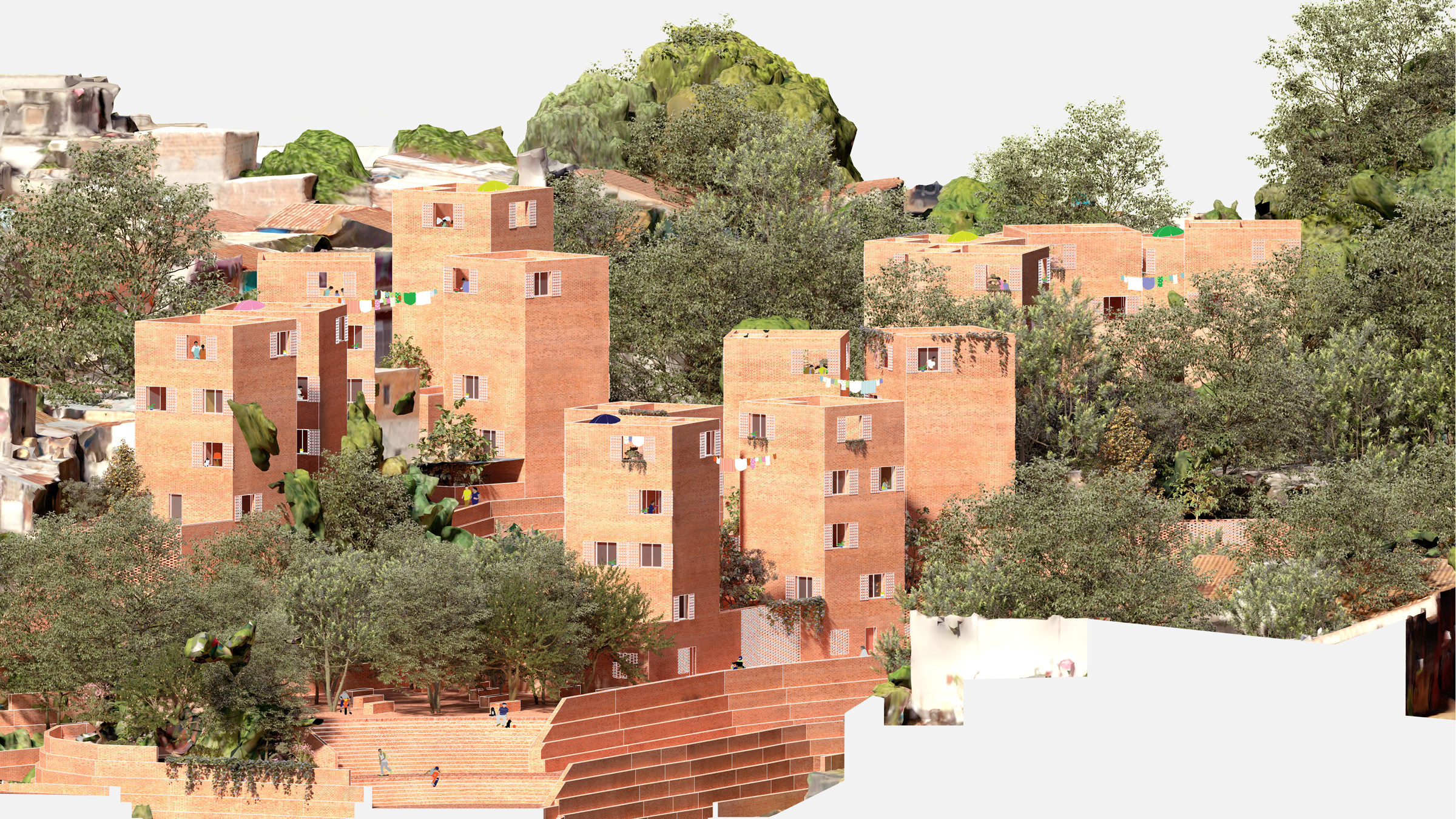
Between the housing clusters, a rehabilitated ravine which was previously polluted and neglected, is now transformed into a linear park that manages stormwater, provides terraced gardens, and offers safe communal spaces. The previously informal footpaths are expanded into landscaped pedestrian routes and pocket parks, improving connectivity, safety, and quality of life. Critical infrastructure such as waste disposal, outdoor public lighting, and emergency access is subtly integrated into the design, addressing long-standing service deficiencies.
The project’s deep commitment to participatory design and construction empowers residents, fostering pride and ownership. Local labour, including future residents themselves, participates actively, acquiring skills and economic opportunities. Supported by Paraguay’s Ministry of Urban Development and Housing, this initiative demonstrates a transferable framework for inclusive urban regeneration—providing a replicable model for social equity, environmental stewardship, and sustainable community development, and showing how the informal settlements common across Latin America can be transformed into safer, well-serviced social housing.
Jury Appraisal
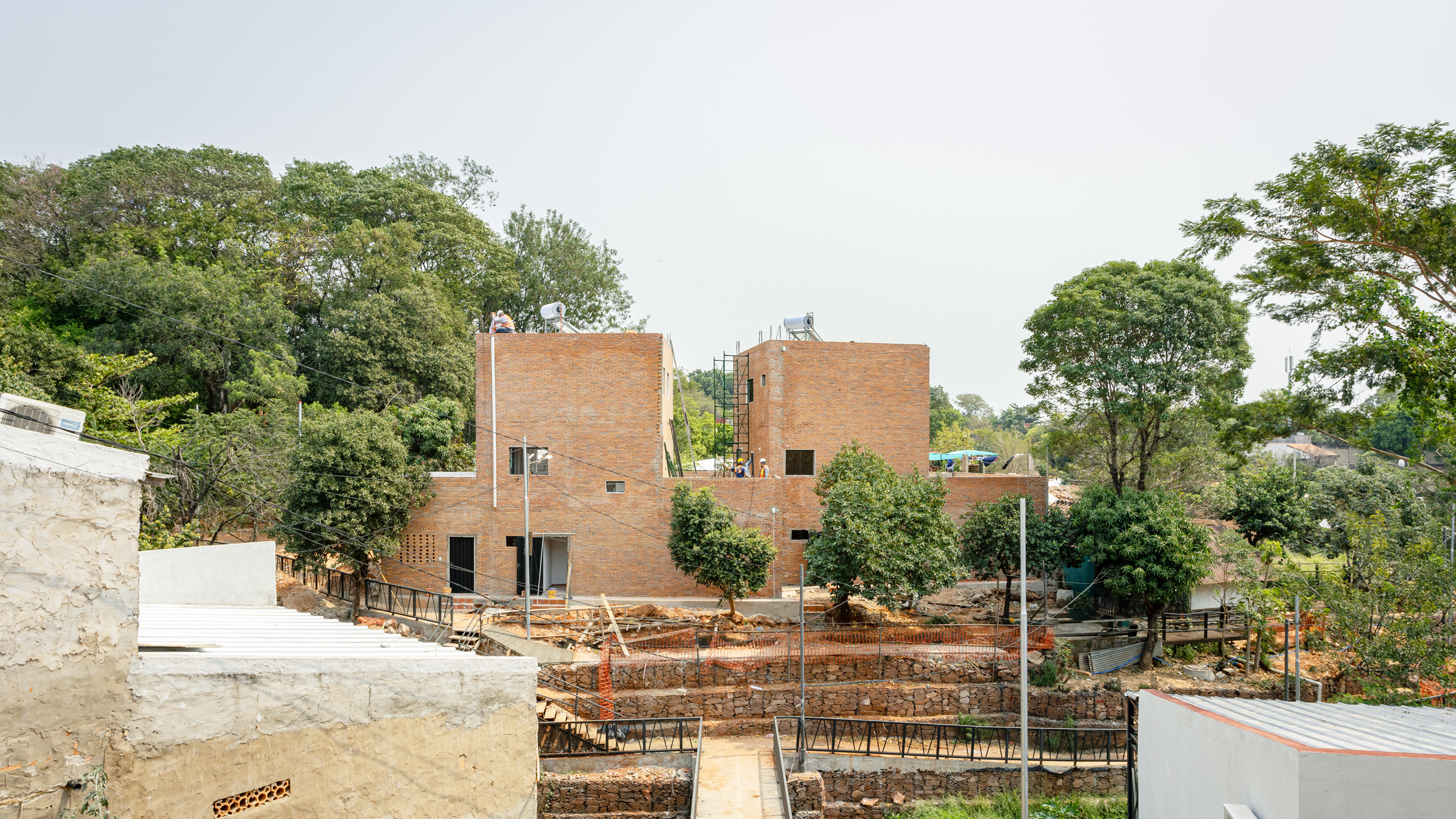
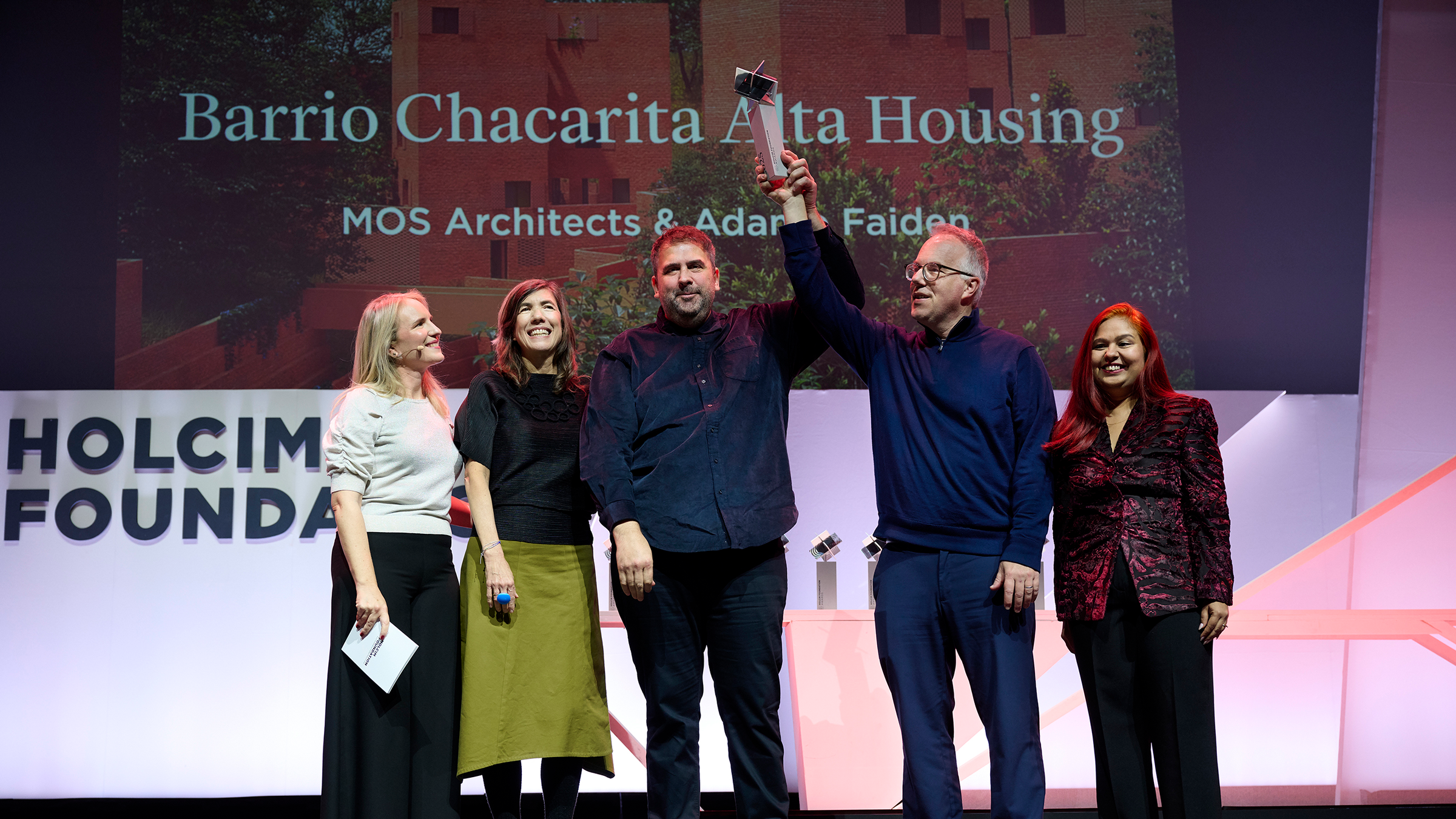
The regional jury hailed Barrio Chacarita Alta Housing as an important, comprehensive response to Latin America’s pressing social housing challenges. Jurors commended the project’s holistic approach, highlighting its success in combining new housing provision with the thoughtful rehabilitation of public spaces. The project was praised for its sensitivity to community needs, moving beyond standardized solutions to provide tailored designs "for each family," ensuring relevance and effectiveness. Jurors emphasized the exemplary participatory design and construction process, appreciating the depth of community engagement and noting that residents were actively involved in creating their own solutions. The intelligent use of local, common materials impressed the jury, demonstrating that innovation can arise from understanding and responding thoughtfully to local realities rather than imposing unfamiliar methods. Ultimately, the jury recognized Chacarita Alta as a powerful, replicable model for inclusive urban regeneration, thoughtfully integrating architecture, community, and environmental sustainability to uplift marginalized urban neighborhoods.
Project Team
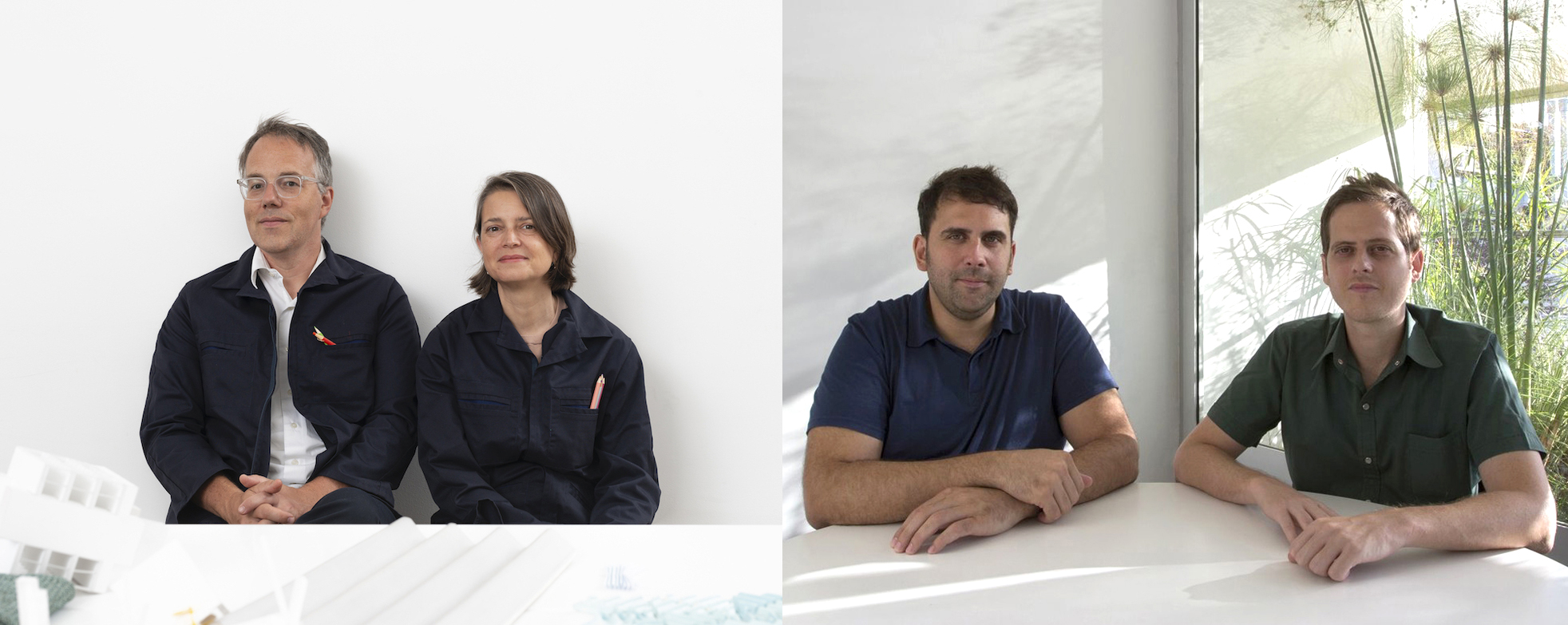
Main Authors: Hilary Sample and Michael Meredith, MOS Architects; Sebastian Adamo and Marcelo Faiden, Adamo Faiden
Further Authors: Vivi Pozzoli and Horacio Cherniavsky, Equipo de Arquitectura
Themes
Social Equity & Inclusion | Circularity & Resource Efficiency | Well-Being & Comfort
Status
Under Construction
Acknowledgements
-
Additional Credits
MOS collaborators: James Wood, Joel McCullough, Tianyang Sun, Paul Ruppert, Ben Dooley
Adamo-Faiden collaborators: Emilia Fernández, Alejandro Garzón, Francisco Fioramonti, Elías Parra, María Mercedes Anelo, Renzo Scotto d'Abusco, Lucas Beizo, Federico Knichnik, Sofía Svaton, Camila Goldman, Magdalena Dussel, Ezequiel Dalorso.
Equipo de Arquitectura collaborators: Gabriela Ocampos, Patricio Duarte, Franco Pinazo, Rolph Vuyk.
Structural Engineer: Ahf S.A.
Electrical Engineer: Mackinlay Vignaroli S.A.
Sanitary Engineer: Inglese Consultores S.A.
Geotechnical: Logos S.R.L.
Sustainability Goals
-
Healthy Planet
Sustainable building design through passive measures
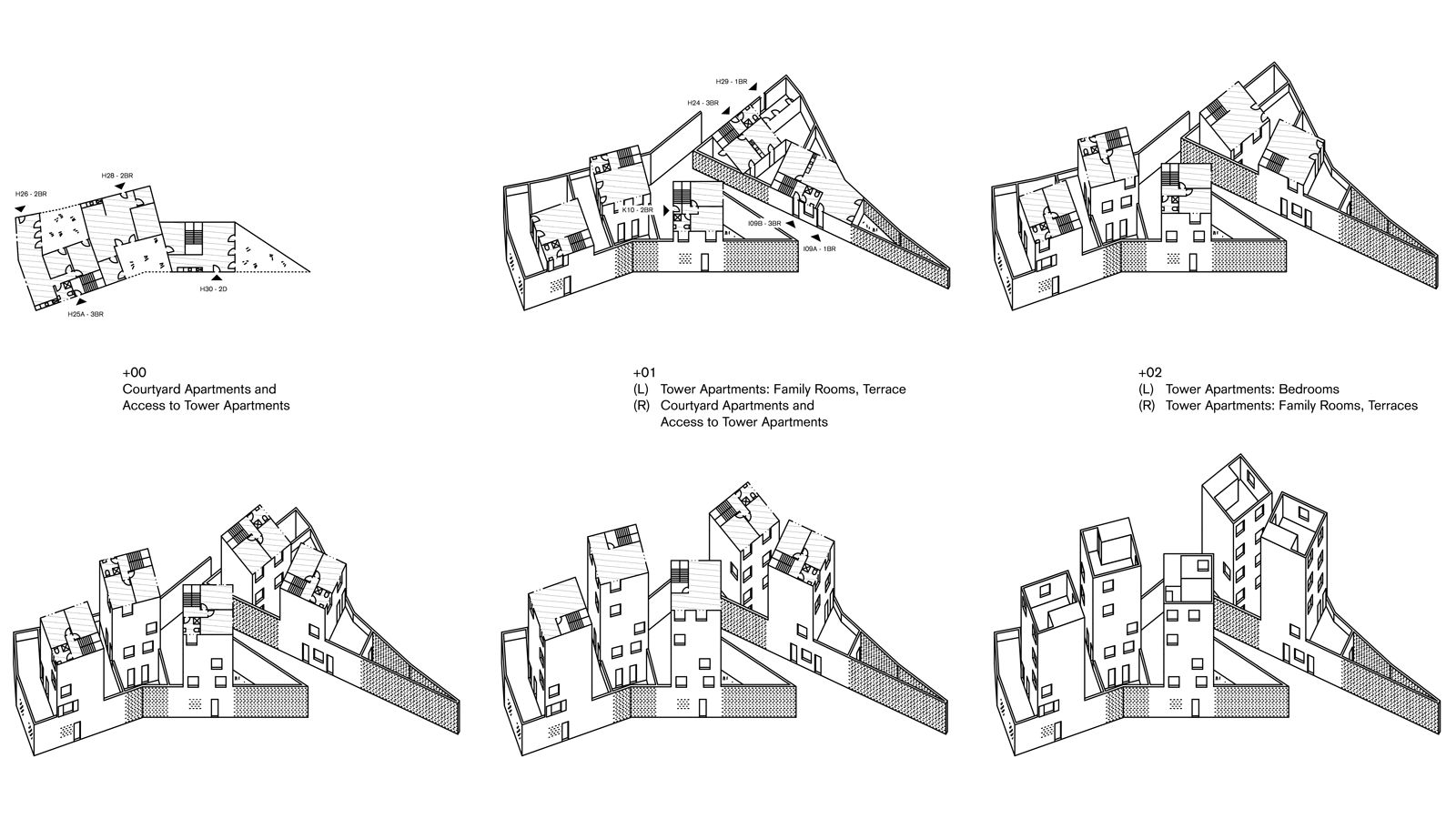
Locally produced brick walls as well as ceramic floors and ceilings provide thermal mass, helping to minimize heat transfer to the interior despite the simple construction method. They also regulate humidity, exchanging inner and outer moisture. All ground level units have windows in multiple directions, and tower units have windows on all sides. This allows for passive ventilation through the apartments. The stair core operates as a solar chimney, helping to ventilate and cool the tower units, and all ground floor units open onto internal courtyards and gardens, where vegetation will help to condition and cool the rooms.
Efficient construction and operations
The bricks are made locally from local clay, produced utilizing an “auto-sufficient” collective-construction technique. The ground floor of the project traces the topography, minimizing excavation, and allowing for an array of different shaped exterior rooms within the buildable footprint. Above the ground floor, all towers are the same repeatable square modules, allowing for maximum efficiency while allowing different orientations according to the topography and urban context.
Landscape & Biodiversity Integration
Rainwater is collected for water storage, to be used for watering plants, which will be strategically placed throughout the 61 garden courtyards and 81 roof terraces, again reducing monthly expenses for the families that will live there and helping to maintain gardens for food production, promoting biodiversity and stewardship for the natural environment to thrive.
Land use & Transformation
The neighborhood rests along a canal currently used for waste disposal. The project will help this neighborhood become integrated with the rest of the city through improved urban circulation paths and better access, along with sewage infrastructure and dignified dwelling units. The project will allow all existing residents to maintain ownership and agency over their housing, while receiving significant improvement to their quality of life. While the existing mixture of residential and commercial is maintained, the addition of improved rainwater storage infrastructure and internal courtyards will allow residents valuable space to grow their own food, adding a small agricultural element to the existing residential and commercial use.
-
Thriving Communities
Participatory Design
The residents were involved in a participatory design process that engaged each family’s specific needs, creating a sense of individual belonging and ownership. Detailed spreadsheets were kept with each resident’s needs allowing specific ailments or desires to be addressed from the start. Meetings with the residents throughout the process allowed the design to respond to specific feedback, ensuring that the residents maintained agency over their places of dwelling. This is not typical mechanized housing but 78 houses. Households have equitable areas based on family size and are all provided with exterior spaces. Architecture is a framework for the socio-political, working towards a long-term and sustainable, pedestrian-based urbanism.
Community Impact and Resilience
This project provides housing and infrastructure to La Chacarita. La Chacarita is one of the oldest informal neighborhoods, characterized by poverty, rugged topography, views of the Paraguay River, and an accumulation of small houses. This is part of an urban transformation that is being implemented by the Ministerio de Urbanismo, Vivienda y Hábitat de Paraguay (MUVH) and the Inter-American Development Bank. The aim is to improve the community, transforming this formerly neglected area. Through both a bolstering of the existing canal retaining walls, and dignified housing for the current residents, filled with light, air.
-
Viable Economics
Financial Feasibility
This is a project for the people, approximately 300 residents. Half are adults and half are children, and the majority are the 2nd and 3rd generation. This project is based upon a citizen’s fundamental right to housing, while integrating the formal historical city with informal settlements and repairing the natural landscape and water channels that cross the river bank. The housing is interspersed with gardens and terraces to help with food production, and commercial spaces for residents who run small businesses. The housing and related space help to economically sustain the residents who have been designated the clients and owners of this new housing.
-
Uplifting Places
Aesthetic Qualities and Cultural Integration
This housing is located in La Chacarita, Asunción, Paraguay, near the city center. La Chacarita is an informal accumulation of houses built into the terrain for rural migrants seeking new opportunities. The project will be made with materials and construction methods which are local to the region. Its footprint follows the natural contours of the topography, working as a retaining wall where needed, while defining street edges, courtyards and gardens which allow for light, ventilation, and local flora. Upper floors are repeated and rectilinear, for ease of construction. This design strategy adapts to both the site’s informal geometry and the community’s needs, integrating the architecture with the surrounding landscape and community.
Other Winners | Latin America
Porto Alegre, Brazil | Find out more
Medellín, Colombia | Find out more
São Paulo, Brazil | Find out more